For uncomplicated gallstones, the key decision is not whether a robot sounds more advanced, but whether its added equipment changes the result you care about: safety, pain, hospital stay, recovery time and cost. You will be able to compare both operations, recognise when laparoscopy is suitable, and ask focused questions before choosing a surgical team in Pune.
Key takeaways
- Gallbladder removal treats the diseased organ, not only existing stones.
- Robotic surgery changes instrument control, not the need for sound surgical judgment.
- Ask for the complete package cost, including tests, hospital stay and follow-up.
- Choose a team that can change the plan when anatomy or inflammation requires it.
When gallbladder removal is the right operation
Laparoscopic cholecystectomy is recommended when the gallbladder is causing symptoms or carries a meaningful future risk. It removes the entire gallbladder, not just its stones, because a diseased gallbladder can continue making new stones.
- Recurrent or symptomatic gallstones causing biliary pain are a standard reason for planned surgery.
- Acute calculous cholecystitis usually calls for early surgery during the same hospital admission when the patient is suitable, rather than automatically waiting six weeks.
- Chronic cholecystitis and gallstone pancreatitis warrant removal after the pancreatitis and any immediate complications receive appropriate treatment.
- Selected gallbladder polyps require surgery based on their size, growth, appearance and patient risk factors.
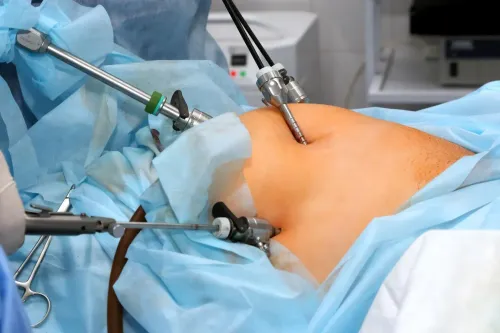
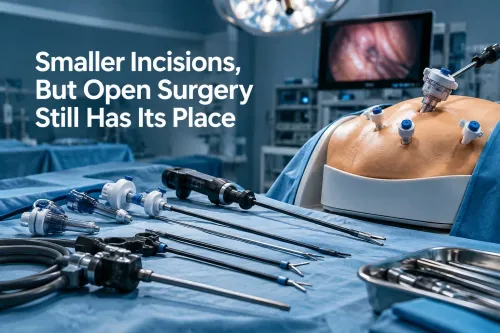
The operation uses general anaesthesia, carbon-dioxide inflation to create working space, and usually four small abdominal incisions for the camera and instruments. These are key laparoscopic gallbladder surgery in Pune benefits compared with open surgery, but neither laparoscopic nor robotic surgery guarantees no scars or pain.
Urgent treatment differs from planned surgery because infection, inflammation and anaesthetic risk determine timing. Jaundice, a dilated common bile duct or markedly abnormal liver tests can require MRCP, endoscopic ultrasound or ERCP before or around surgery. ERCP removes stones from the bile duct; it does not replace gallbladder removal when the gallbladder remains the source.
Laparoscopy versus robotics: what changes and what does not
Both operations remove the gallbladder through small abdominal incisions, but the operating setup differs. In standard laparoscopy, the surgeon stands at the operating table, uses straight instruments and watches a two-dimensional or high-definition camera image controlled by an assistant.
In robotic surgery, the surgeon sits at a console, views the field in three dimensions and moves wristed instruments through remote hand controls.
| Option | Operating setup | Instrument and camera control | Practical trade-off |
|---|---|---|---|
| Standard laparoscopy | Surgeon at the table | Straight instruments; assistant controls the camera | Lower cost, shorter operating time and wider availability |
| Robotic surgery | Surgeon at a console | Wristed instruments; three-dimensional view; surgeon-controlled remote controls | Better ergonomics and articulation in selected difficult anatomy, but higher cost and often longer operating time |
The surgeon controls and supervises every robotic movement. The robot does not operate independently, interpret findings or make decisions. For routine gallbladder removal, comparative evidence has not shown consistent reductions in bile-duct injury, major complications, mortality, hospital stay, pain or return-to-work time.
Thus, the main laparoscopic gallbladder surgery in Pune benefits are value and access, while a robotic gallbladder surgery Pimpri Chinchwad comparison should focus on outcomes and safety processes, not equipment alone.
Neither approach guarantees scar-free skin, no pain or no complications. Either can involve bile leak, bleeding, infection, retained common-bile-duct stones, bile-duct injury and shoulder-tip pain caused by residual carbon dioxide.
When laparoscopy needs a different plan
Severe inflammation, dense adhesions from previous upper-abdominal surgery, uncontrolled bleeding or unclear anatomy can make continued laparoscopy unsafe. Suspected gallbladder cancer also changes the plan because rupture or incomplete removal can compromise cancer treatment.
If you cannot tolerate general anaesthesia, neither laparoscopic nor robotic surgery is automatically suitable; anaesthetic optimisation or another treatment plan comes first.
The safety process follows a defined sequence:
- The surgeon seeks the Critical View of Safety in either laparoscopic or robotic surgery: clear the hepatocystic triangle, identify the cystic duct and cystic artery, and separate the lower gallbladder from the liver bed before dividing anything.
- If that view cannot be achieved, the surgeon stops forced dissection. A subtotal cholecystectomy, intraoperative cholangiography or conversion to open surgery can reduce the risk of cutting the common bile duct.
- Conversion is chosen when bleeding cannot be controlled, anatomy remains uncertain, adhesions block safe exposure, cancer is suspected or a bile-duct injury needs repair. It is a safety decision, not a failure.
Intraoperative cholangiography is useful when anatomy is unclear, common-bile-duct stones are suspected, liver tests are abnormal or a bile-duct injury is possible. It outlines the ducts and can expose stones or an injury; a normal ultrasound does not reliably exclude a duct stone.
Obesity increases demands on exposure, trocar placement, anaesthesia and clot prevention, but it does not automatically require robotic surgery.
Recovery, cost and the bariatric-surgery question
Laparoscopy usually means four small incisions, less abdominal-wall trauma and less wound discomfort than open gallbladder surgery. That advantage supports earlier movement, but it does not guarantee painless recovery or immediate return to normal activity.
| Approach | Practical recovery | Cost and limitations |
|---|---|---|
| Laparoscopic | Early walking and oral fluids once alert; same-day discharge when pain, nausea, vital signs and mobility are satisfactory | Usually lower cost and wider availability than robotics; complications can still require admission |
| Open | Larger incision, greater abdominal-wall trauma and slower movement | Longer recovery and admission are more likely |
Expect to return to desk work sooner than to lifting, driving for long periods or physically demanding work. Inflammation, difficult dissection, bile leak, infection, bleeding or another complication can extend the timeline, so your job and the operation’s findings matter more than a fixed number of days.
Overnight admission is more likely after acute inflammation, difficult dissection, significant medical illness, conversion to open surgery or a complication. It reflects recovery needs, not a failure of laparoscopy.
Obesity can make trocar placement, exposure, anaesthesia and clot prevention more demanding, but it does not automatically require robotic surgery. “Bariatric surgeon in Pune gallbladder surgery” should prompt questions about biliary experience, obesity-risk management, anaesthesia and postoperative support.
Cholecystectomy removes a diseased gallbladder. Bariatric procedures treat severe obesity and metabolic disease; combining them is not routine. The bariatric surgeon in Pune benefits you hear about are not automatically benefits of robotic gallbladder surgery.
How to choose a Pune surgical team and compare the total package
Choose the team by safety record and judgment, not by the robot’s presence. Ask about routine, acute and difficult gallbladder cases, then request the surgeon’s conversion rate and bile-duct-injury rate, with the patient numbers and reporting period.
| Option | What to compare | Question to ask |
|---|---|---|
| Laparoscopy | Broad availability and usually lower cost | What are the laparoscopic gallbladder surgery in Pune benefits for my anatomy? |
| Robotics | Three-dimensional view and wristed instruments | What specific difficulty would robotic assistance solve? |
| Either approach | Critical View of Safety | How will you clear the hepatocystic triangle, identify the cystic duct and artery, and separate the lower gallbladder from the liver bed? |
Ask whether the hospital provides postoperative ultrasound or CT, and has timely access to MRCP and ERCP. Confirm the plan if bleeding, unclear anatomy or suspected cancer requires open surgery; conversion is a safety decision, not a failure.
Request one itemised estimate covering the surgeon, anaesthesia, operating-room time, robotic disposables, pathology, room stay and treatment of complications. Insurance coverage for robotic procedures varies. For a robotic gallbladder surgery Pimpri Chinchwad comparison, compare this total rather than the advertised procedure fee.
Ask how prior upper-abdominal surgery, obesity, suspected cancer, abnormal liver tests and anaesthetic risk change the recommendation. Dr.Nikhil Jillawar 08048037739 in Baner can provide a gastrointestinal assessment that weighs anatomy, safety processes, hospital resources and value rather than treating robotics as an automatic upgrade.
Related services
Robotic Gallbladder Surgery in Pimpri-Chinchwad, Pune Robotic Gallbladder Surgery in Pimpri-Chinchwad, Pune Robotic Gallbladder Surgery is an advanced minimally invasive surgical technique used to treat certain gallbladder conditions. Dr. View service → |
Robotic Surgery in Pimpri Chinchwad, Pune Robotic Surgery in Pimpri Chinchwad, Pune Robotic Surgery is an advanced form of minimally invasive surgery that uses a robotic-assisted surgical system to help surgeons perform complex... View service → |
Frequently asked questions
When is gallbladder removal the right operation?
Removal is appropriate when gallstones cause symptoms or complications, or when the gallbladder presents a meaningful future health risk. The operation removes the entire gallbladder because leaving a diseased organ can allow new stones and symptoms to develop.
What is the difference between laparoscopic and robotic gallbladder surgery?
Both approaches use small abdominal incisions, a camera and general anaesthesia to remove the gallbladder. Robotic surgery adds computer-assisted instrument control and three-dimensional visualisation, while laparoscopy uses conventional instruments. The surgeon’s experience and the patient’s anatomy remain central to the result.
When might laparoscopic gallbladder surgery need a different plan?
Severe inflammation, dense scar tissue, unusual anatomy, bleeding or suspected bile-duct injury can require a change in approach. The surgeon may pause, perform additional imaging, convert to open surgery or arrange a more specialised procedure when safety demands it.
How should you compare gallbladder surgery costs in Pune?
Compare the complete package rather than the quoted operation alone. Ask whether it includes consultation, blood tests, ultrasound or MRCP, anaesthesia, operating-room charges, medicines, room rent, pathology, complications and follow-up visits.
Related service
Laparoscopic Surgery in Pimpri Chinchwad, Pune – Dr. Nikhil Jillawar Laparoscopic Surgery in Pimpri Chinchwad, Pune – Dr. Nikhil Jillawar Dr. Nikhil Jillawar is an experienced Laparoscopic Surgeon in Pune, providing advanced minimally invasive surgical treatment for suitable patients. View service → |