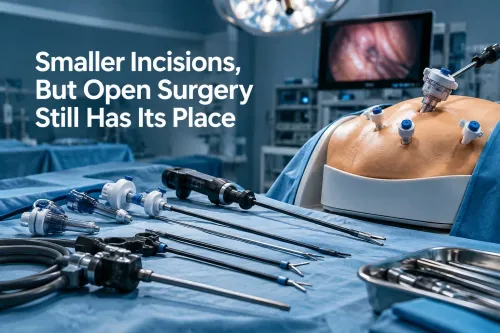
Small-incision gallbladder removal is not automatically the correct cancer operation. You will learn how imaging and pathology determine whether you need a simple cholecystectomy, a wider liver and lymph-node resection, an open operation, or non-surgical treatment, and which questions to take to a specialist consultation.
Key takeaways
- Simple gallbladder removal is not always enough for confirmed cancer.
- Bring scan images, pathology slides, reports, and operative notes to consultation.
- Ask whether staging shows disease that can be removed completely and safely.
- Compare laparoscopic, robotic, and open approaches based on cancer clearance.
When is laparoscopic gallbladder surgery appropriate for cancer?
Simple laparoscopic cholecystectomy removes the gallbladder for stones or inflammation; it is not automatically adequate cancer surgery. For laparoscopic gallbladder surgery in pune cancer patients, confirmed or strongly suspected cancer requires staging and a plan for complete, technically safe clearance—not just removal of the organ.
An oncologic operation may include removal of the gallbladder bed, often liver segments IVb and V, together with regional lymph-node dissection. Avoid a simple laparoscopic operation when scans suggest:
- Liver invasion or a mass extending into the gallbladder bed
- Major blood-vessel involvement
- Bile-duct involvement or a hilar or common-bile-duct lesion
- Suspicious distant disease in the liver, lungs or peritoneum
- Tumour spread beyond the gallbladder
Perforation, bile spillage and tumour fragmentation can seed cells, complicate staging and make later treatment harder. A controlled minimally invasive approach may still be selected for carefully localized disease, but conversion to open surgery is a safety decision when exposure, bleeding control or cancer clearance requires it. It is not a failure.
Surgery is potentially curative only for selected localized disease. Distant spread or major vascular, bile-duct or liver involvement may require systemic treatment or symptom-directed procedures instead. Therefore, laparoscopic gallbladder surgery in pune cancer patients is appropriate only after imaging, staging and specialist assessment confirm that cancer clearance is technically safe.
What happens when cancer is found after gallbladder removal?
An incidental diagnosis starts with expert review of the complete histopathology report and the original operative details, not the word “cancer” alone. The team must confirm how the specimen was handled, whether bile spilled, and whether the operation remained technically safe.
1. Identify the findings that set the next step: T stage and depth of invasion, tumour differentiation, margin status, lymphovascular invasion, perineural invasion, gallbladder perforation, and the number of lymph nodes examined. T1a cancer confined to the lamina propria, completely removed with clear margins, may not require liver re-resection.
T1b or deeper disease is commonly assessed for completion oncologic surgery, but T1b decisions require individualized discussion.
2. Confirm that the gallbladder was removed without tearing and sent for histopathological examination. A note stating only “cholecystectomy done” proves that the gallbladder was removed; it does not prove that cancer was excluded. The pathology report must establish the diagnosis, depth, margins and other risk features.
3. Decide whether tissue is needed before further treatment. Biopsy is particularly useful when imaging shows unresectable disease, metastases or a non-surgical situation requiring systemic therapy. Choose a percutaneous route with possible tumour seeding and future surgery in mind, because an avoidable biopsy tract can complicate later cancer clearance.
Which scans and reports should you bring to the cancer consultation?
Bring the original images and reports, not only radiology summaries. Your consultation folder should include:
- A contrast-enhanced CT scan of the chest, abdomen and pelvis.
- Liver MRI or MRCP when bile-duct anatomy, a hilar lesion or an obstruction needs clarification.
- Prior ultrasound images and written reports.
- Liver-function tests showing bilirubin, alkaline phosphatase, AST and ALT.
- The operative note from any previous gallbladder surgery.
- The complete pathology report, plus glass slides or paraffin blocks if the specialist requests review.
Imaging review must answer four questions: Does the tumour reach the liver, bile duct or major vessels? Are regional lymph nodes involved? Is there distant spread? PET-CT may be selected for a specific staging question, but it does not replace high-quality contrast CT or MRI.
Gallbladder and bile-duct cancers require different planning:
| Diagnosis or finding | What it may require | Why routine cholecystectomy is insufficient |
|---|---|---|
| Gallbladder cancer | Gallbladder-bed or liver resection, often segments IVb and V, with regional lymph-node dissection | The disease may extend beyond the gallbladder |
| Jaundice, common-bile-duct lesion or hilar lesion | Bile-duct resection, liver resection and reconstruction | The primary tumour may be in the bile duct rather than the gallbladder |
Do not assume “gallbladder cancer” means a standard laparoscopic removal. The scan pattern and pathology determine the operation.
How do surgeons choose between laparoscopic, robotic and open cancer surgery?
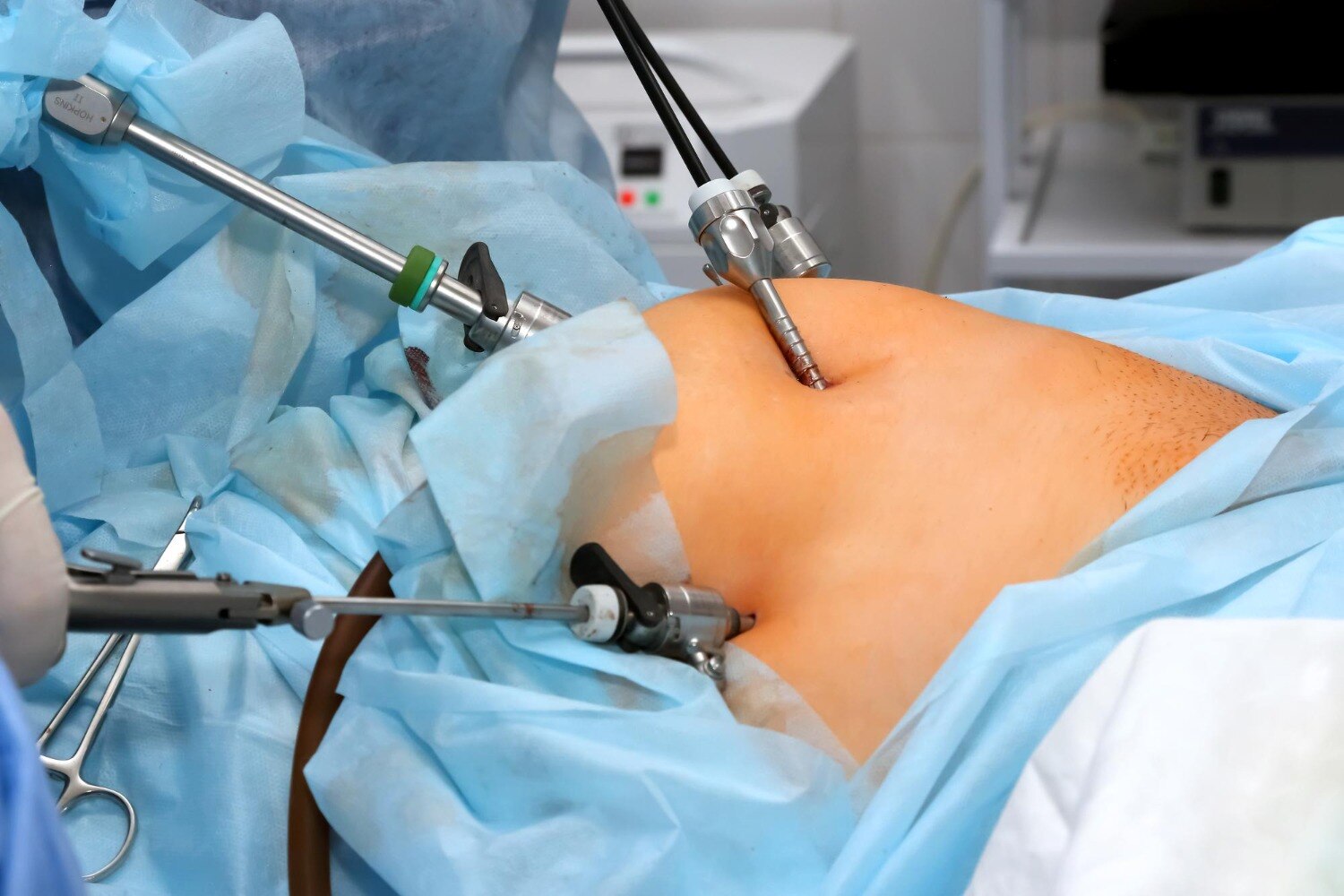
The safest operation is the one that clears the cancer completely, not necessarily the one with the smallest incisions. Laparoscopic or robotic surgery can reduce wound morbidity and speed early recovery in carefully selected, localized cases, but the plan must accommodate liver resection, lymphadenectomy, bile-duct work, or conversion to open surgery.
| Option | Main benefit | Cancer-specific limitation |
|---|---|---|
| Laparoscopic | Smaller incisions and faster early recovery | Limited if tumour location, anatomy or bleeding requires wider access |
| Robotic | Precise instrument control through small incisions | Still requires oncologic clearance and may need conversion |
| Open | Direct access for complex resection and reconstruction | Larger wound and slower early recovery |
Small incisions are not worth bile-duct injury, bile leak, major bleeding, inadequate lymph-node assessment, a positive margin, or an unplanned second operation. A longer operation can also erase the early recovery advantage.
Before consenting, ask:
- Is this a simple cholecystectomy, completion radical resection, or palliative treatment?
- Will liver segments IVb and V, or another area, be removed?
- How will regional lymph nodes be cleared?
- What finding will trigger conversion to open surgery?
- Can the team manage bile-duct reconstruction and other hepatobiliary complications?
The decision depends on tumour location, prior surgery, anatomy, imaging and team capability, not the surgical label. For anyone comparing laparoscopic gallbladder surgery Pune providers, ask whether the team routinely manages hepatobiliary cancer rather than choosing on “laparoscopic” alone.
What should you ask a gallbladder cancer team in Pune?
A search for gi cancer surgeon pune, gastrointestinal surgeon pune or gi cancer surgery pimpri chinchwad is only a starting point. Ask whether the team routinely treats hepatobiliary malignancies, reviews scans together, and can provide liver resection, lymphadenectomy, bile-duct reconstruction, medical oncology, interventional radiology and intensive-care support.
Ask these questions before consenting:
- Who will review the CT, MRI or MRCP, and will a multidisciplinary team examine the images?
- How many gallbladder-cancer cases does the surgeon manage, rather than routine gallstone operations?
- Will the pathology report, slides or tissue blocks be reviewed by a specialist pathologist?
- If surgery is possible, which liver segments and regional lymph nodes will be removed?
- If the bile duct is involved, can the team perform reconstruction and manage a bile leak or vascular injury?
- Is medical oncology available for chemotherapy or other systemic treatment?
- What radiology and intensive-care facilities are available if complications occur?
The consultation must classify the plan clearly:
| Disease assessment | Likely treatment direction | Question to resolve |
|---|---|---|
| Potentially curable localized disease | Cancer-directed resection | What operation achieves clear margins? |
| Unresectable or metastatic disease | Systemic treatment | Which biopsy and oncology plan is needed? |
| Major vessel, bile-duct or liver involvement | Symptom-directed or combined treatment | Is drainage, stenting or palliation safer? |
Bring your scans and pathology documents to Dr.Nikhil Jillawar 08048037739 for discussion of the proposed extent of surgery; do not choose solely because “laparoscopic” appears in an advertisement. Seek timely review for a gallbladder mass, irregular wall thickening, suspicious nodes or unexplained biliary obstruction.
Related services
GI Cancer Surgery in Pimpri Chinchwad, Pune GI Cancer Surgery in Pimpri Chinchwad, Pune GI Cancer Surgery in Pune – Dr. Nikhil Jillawar Dr. Nikhil Jillawar provides specialized surgical consultation and treatment for selected... View service → |
Robotic Gallbladder Surgery in Pimpri-Chinchwad, Pune Robotic Gallbladder Surgery in Pimpri-Chinchwad, Pune Robotic Gallbladder Surgery is an advanced minimally invasive surgical technique used to treat certain gallbladder conditions. Dr. View service → |
Frequently asked questions
When is laparoscopic gallbladder surgery appropriate for cancer?
It may suit carefully selected early gallbladder cancers when staging shows the tumour can be removed safely and completely. A standard keyhole gallbladder removal is not automatically adequate cancer surgery.
What happens when cancer is found after gallbladder removal?
Your team reviews the pathology report, operative notes, and scan results, then completes staging. Further liver and lymph-node surgery may be discussed when it offers a realistic chance of complete clearance.
Which scans and reports should I bring to a gallbladder cancer consultation?
Bring CT or MRI images and reports, ultrasound findings, pathology reports, glass slides or tissue blocks, blood-test results, discharge papers, and the operative note from gallbladder removal.
How do surgeons choose between laparoscopic, robotic, and open cancer surgery?
They consider tumour stage and location, liver or bile-duct involvement, lymph nodes, previous operations, the need for reconstruction, and whether the approach allows clear margins without tumour spill.
What should I ask a gallbladder cancer team in Pune?
Ask for the stage, treatment goal, planned organs and lymph nodes for removal, reason for the recommended approach, possibility of conversion to open surgery, expected recovery, and whether a multidisciplinary review is planned.
Related services
Laparoscopic Surgery in Pimpri Chinchwad, Pune – Dr. Nikhil Jillawar Laparoscopic Surgery in Pimpri Chinchwad, Pune – Dr. Nikhil Jillawar Dr. Nikhil Jillawar is an experienced Laparoscopic Surgeon in Pune, providing advanced minimally invasive surgical treatment for suitable patients. View service → |
General & GI Surgery in Pimpri Chinchwad, Pune General & GI Surgery in Pimpri Chinchwad, Pune Dr. Nikhil Jillawar is an experienced General Surgeon and Surgical Gastroenterologist in Pimpri Chinchwad, Pune, providing comprehensive surgical... View service → |