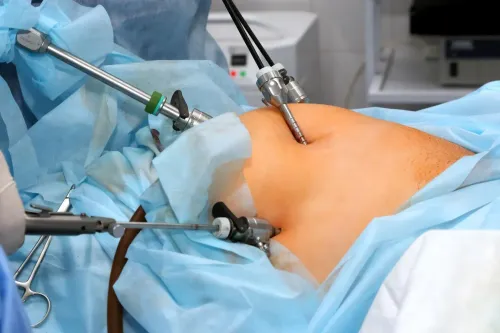
The right surgeon depends on whether you need treatment for obesity and related metabolic disease or an operation for gallbladder problems. By separating these conditions, checking the tests and treatment options, and asking about safety systems, you can choose the appropriate specialist rather than relying on a procedure label.
Key takeaways
- Match bariatric care to obesity-related disease and gallbladder care to biliary symptoms.
- Seek assessment for persistent right upper abdominal pain, fever, jaundice, or vomiting.
- Ask whether laparoscopic, robotic, or open surgery fits your anatomy and diagnosis.
- Verify training, hospital privileges, bile-duct expertise, and an itemised treatment plan.
Which specialist matches your medical problem?
A bariatric surgeon treats obesity and related metabolic disease; a gallbladder surgeon treats symptomatic gallstones and gallbladder or bile-duct complications. “Bariatric surgeon in Pune” is a search phrase, not proof of a recognised qualification, while “robotic gallbladder surgeon” describes a surgical platform, not a separate specialty.
| Specialist or approach | Main problem addressed | Key point |
|---|---|---|
| Bariatric surgeon | Obesity, diabetes and related metabolic disease | Assesses long-term weight and health needs |
| Gallbladder surgeon | Symptomatic stones, cholecystitis, polyps or biliary pancreatitis | May need laparoscopic cholecystectomy or duct treatment |
| Robotic gallbladder surgeon | Gallbladder surgery using robotic instruments | Robotic assistance does not automatically mean better results |
For bariatric assessment, discuss BMI, obesity-related conditions, previous weight-loss attempts, eating patterns, psychological factors, medicines, nutritional status, sleep-apnoea risk and your ability to follow lifelong monitoring.
The 2022 ASMBS–IFSO guidance recommends surgery at BMI 35 kg/m² or higher regardless of obesity-related disease, and consideration at BMI 30–34.9 kg/m² when significant metabolic disease remains inadequately controlled with nonsurgical treatment. BMI starts the discussion; it does not finish it.
Ask whether sleeve gastrectomy or Roux-en-Y gastric bypass fits your reflux, diabetes, eating pattern, anatomy and medicines. Sleeve surgery avoids intestinal bypass but can worsen reflux. Bypass often improves reflux and produces strong metabolic effects, but increases risks of micronutrient deficiency, internal hernia, marginal ulcer and dumping symptoms.
Follow-up includes haemoglobin, iron, vitamin B12, folate, calcium and vitamin D monitoring, with prescribed supplements.
When do gallbladder symptoms require assessment or surgery?
An ultrasound showing gallstones does not automatically mean you need surgery. Cholecystectomy is considered for symptomatic stones and complications, not silent stones found by chance. Acute or chronic cholecystitis, gallstone pancreatitis, gallbladder polyps and common-bile-duct stones can change the treatment plan.
1. Arrange assessment for right-upper-abdominal pain after meals, repeated attacks, fever, jaundice, persistent vomiting, or pain spreading to the right shoulder or back. Do not assume severe or recurring pain is indigestion. Seek urgent care for fever with jaundice, severe persistent pain or repeated vomiting.
2. Initial evaluation commonly includes an abdominal ultrasound, liver-function tests, a complete blood count and kidney-function testing. These results help identify inflammation, infection, obstruction and whether you are fit for treatment.
3. Jaundice, abnormal liver tests, a widened common bile duct or suspected duct stones can require magnetic resonance cholangiopancreatography or endoscopic ultrasound. A confirmed duct stone may need ERCP or another duct-clearance procedure; removing the gallbladder alone does not reliably remove a stone lodged in the common bile duct.
4. For a fit patient with acute calculous cholecystitis, NICE recommends early laparoscopic cholecystectomy within one week of diagnosis. Sepsis, physiological fitness, duct stones and local expertise affect timing. A gallbladder surgeon in Pune or robotic gallbladder surgeon Pune should explain why the proposed approach suits your findings.
How do robotic, laparoscopic and open gallbladder surgery differ?
For suitable patients, conventional laparoscopic cholecystectomy remains the standard minimally invasive operation. The surgeon places a camera and instruments through several small ports, identifies the cystic duct and cystic artery, removes the gallbladder, extracts it through a port and closes the incisions.
| Option | What happens | Main trade-off |
|---|---|---|
| Laparoscopic | Small-port camera surgery | Standard minimally invasive approach |
| Robotic | Surgeon-controlled instruments perform the same cholecystectomy | Greater instrument control, but no guaranteed faster recovery, lower cost or fewer complications |
| Open | A larger abdominal incision provides access | More pain, longer hospital stay and slower recovery |
Robotic assistance does not make decisions or operate independently. A robotic gallbladder surgeon Pune may consider it for difficult anatomy or value its instrument control, but the platform does not replace surgical judgment. Robotic gallbladder surgery Pimpri Chinchwad is still gallbladder removal, not a separate treatment.
Before clipping or cutting, the surgeon should obtain the critical view of safety. If inflammation, scarring, bleeding or unclear anatomy prevents safe progress, conversion to open surgery, subtotal cholecystectomy, drainage or additional imaging protects you; conversion is not necessarily failure.
Ask about the risks with every platform:
- Bile-duct injury, bile leak, bleeding, infection, bowel or vascular injury, retained duct stones, conversion and reoperation.
- Total cost, hospital stay, activity restrictions, emergency surgical support and ERCP availability.
Shorter incisions usually allow earlier routine activity, but compare the safety system rather than the word robotic alone.
How do bile-duct findings change the operation plan?
A bile-duct finding can change a planned gallbladder operation into staged imaging, duct clearance, or a safer alternative. Jaundice, abnormal liver tests, a dilated common bile duct or imaging suggesting a stone can prompt MRCP or endoscopic ultrasound before surgery.
| Finding | Likely plan | Decision to clarify |
|---|---|---|
| Jaundice, abnormal tests or dilated duct | MRCP or endoscopic ultrasound | Is a duct stone suspected? |
| Confirmed common-bile-duct stone | ERCP, surgical duct exploration or another clearance strategy | Who provides treatment, and what happens if clearance is unsafe? |
| Inflammation, scarring or unclear anatomy | Subtotal cholecystectomy, drainage, additional imaging or open conversion | Which bailout option is available? |
Removing the gallbladder alone does not reliably remove a stone already lodged in the common bile duct. During laparoscopic or robotic surgery, the surgeon should confirm the critical view of safety before clipping or cutting; a bailout prevents an incorrectly identified structure from being divided.
If you are comparing a robotic gallbladder surgeon Pimpri Chinchwad or considering robotic gallbladder surgery Pimpri Chinchwad, ask:
- How do you confirm the critical view of safety?
- How often do you use subtotal or open bailout procedures?
- Who manages a bile-duct injury?
- Is ERCP available, with emergency surgical, anaesthesia and intensive-care support?
- Is the proposed operation laparoscopic, robotic or open, and what happens if the plan changes?
- How many nights, when can you return to work, and which costs remain after conversion or an additional procedure?
What should you verify before choosing a surgeon in Pune?
Before booking, verify four things: recognised surgical qualifications, hospital privileges, procedure-specific experience and a clear complication plan. A search label such as bariatric surgeon in Pune or robotic gallbladder surgery pimpri chinchwad is not a credential.
For obesity treatment, check that the consultation covers metabolic disease, previous weight-loss attempts, eating and psychological factors, medicines, nutritional status, sleep-apnoea risk and lifelong follow-up. It should include nutrition counselling, reflux review and medication planning.
| Bariatric option | Main advantage | Important trade-off |
|---|---|---|
| Sleeve gastrectomy | No intestinal bypass | Can cause or worsen reflux |
| Roux-en-Y gastric bypass | Strong metabolic and reflux benefits | Greater risks of micronutrient deficiency, internal hernia, marginal ulcer and dumping symptoms |
Ask which operation fits your reflux, diabetes, eating pattern, anatomy and medicines. Confirm the plan includes supplements and monitoring of haemoglobin, iron, vitamin B12, folate, calcium and vitamin D.
For gallbladder treatment, take your ultrasound and laboratory reports to a gallbladder surgeon in Pune. Ask whether jaundice, abnormal liver tests, a widened bile duct or suspected duct stone requires MRCP, endoscopic ultrasound or ERCP before surgery.
A surgeon offering laparoscopic and robotic care should explain why one approach suits your anatomy; the robot is not automatically superior. Ask:
- How will you confirm the critical view of safety?
- Who manages a bile-duct injury?
- Is ERCP, emergency surgery and intensive-care support available?
- Where will the operation occur, and who provides after-hours care?
In Baner, Dr.Nikhil Jillawar 08048037739 can discuss these choices for abdominal, digestive and gallbladder conditions.
Related service
Robotic Gallbladder Surgery in Pimpri-Chinchwad, Pune Robotic Gallbladder Surgery in Pimpri-Chinchwad, Pune Robotic Gallbladder Surgery is an advanced minimally invasive surgical technique used to treat certain gallbladder conditions. Dr. View service → |
Frequently asked questions
Which specialist should you choose for obesity or gallbladder disease?
Choose a bariatric surgeon for obesity and related metabolic disease. Choose a gallbladder surgeon or gastrointestinal surgeon for symptomatic gallstones, gallbladder inflammation, bile-duct stones, or related complications.
When do gallbladder symptoms require medical assessment?
Arrange assessment for repeated right upper abdominal pain, pain after meals, vomiting, fever, jaundice, dark urine, pale stools, or pain that does not settle. These symptoms can indicate gallstones, inflammation, or bile-duct obstruction.
Is robotic gallbladder surgery better than laparoscopic surgery?
Robotic and laparoscopic operations use small incisions, but robotic surgery adds a computer-controlled instrument platform. The suitable approach depends on the diagnosis, anatomy, previous operations, surgeon expertise, equipment, and hospital support.
When is open gallbladder surgery needed?
Open surgery may be chosen when severe inflammation, scarring, bleeding, complex anatomy, cancer concern, or an unsafe minimally invasive view makes conversion or planned open surgery safer.
How do bile-duct findings change gallbladder surgery?
A dilated bile duct, jaundice, abnormal liver tests, or a suspected duct stone can require additional imaging or bile-duct treatment before, during, or after gallbladder removal.