A patient with obesity, a previous sleeve gastrectomy, gastric bypass or another abdominal operation may develop an incisional, ventral, groin or hiatal hernia, and each requires a different plan. By the end, you will know which findings make laparoscopic repair useful, when open or staged treatment is safer, and what to ask before choosing a surgeon.
Key takeaways
- Seek urgent care for severe pain, vomiting, a tender irreducible bulge, or inability to pass stool.
- Bring previous gastric surgery records, operative notes, and mesh details to your consultation.
- Ask how laparoscopic repair affects recovery, recurrence risk, mesh placement, and possible conversion to open surgery.
- Confirm whether hernia repair should be combined with bariatric surgery or performed separately.
First identify the hernia and recognise urgent warning signs
“Gastric patient” is not a diagnosis: upper-abdominal symptoms may come from a ventral or incisional hernia, an inguinal hernia, a hiatal hernia, or a stomach and bowel disorder. A hernia surgeon in Pune should first identify the anatomy, not assume that every gastric symptom needs laparoscopic abdominal-wall repair.
| Type | Location and typical clues | What it may involve |
|---|---|---|
| Ventral or incisional | Abdominal wall, including a previous surgical or trocar site; a bulge may appear on standing or coughing | Abdominal-wall defect, sometimes containing fat or bowel |
| Inguinal | Groin; discomfort may extend toward the scrotum or inner thigh | Groin-wall defect, requiring a different repair plan |
| Hiatal | Upper stomach moves through the diaphragm; reflux, regurgitation or chest discomfort are common | Stomach–diaphragm junction, not the abdominal wall |
Seek urgent assessment for a painful lump that cannot be pushed back, persistent vomiting, abdominal distension, inability to pass stool or gas, fever, or skin discoloration over the lump. These signs can indicate obstruction or strangulation. Examination and treatment take priority over choosing laparoscopy for smaller scars.
Upper-abdominal pain, reflux, early fullness and vomiting can also result from ulcer disease, bowel obstruction, or complications of previous gastric surgery. A clinician may use examination and ultrasound or CT to assess an abdominal-wall defect, and endoscopy when reflux or a stomach complication is suspected. Laparoscopic abdominal-wall repair does not treat every upper-abdominal symptom.
How previous gastric surgery changes the repair plan
1. The surgeon first maps the defect: its location, size, reducibility, symptom severity, overlying skin and any bowel involvement. A painful, irreducible lump, discoloured skin or obstructive symptoms changes the urgency and may rule out routine laparoscopic planning.
2. Bring records of sleeve gastrectomy, gastric bypass, open upper-abdominal operations, prior mesh repairs and trocar-site procedures, along with relevant CT scans or ultrasound reports. Adhesions can tether bowel, altered stomach or bowel anatomy can change the repair, and old scars can make usual port positions unsafe.
Selected ventral, incisional and recurrent hernias suit laparoscopy; dense adhesions, unsafe access, a very large defect, loss of domain, infection or complex abdominal-wall separation can favour open or staged reconstruction.
3. Assessment also includes weight trend, protein intake, anaemia, diabetes control and deficiencies such as iron, vitamin B12, folate or vitamin D after bariatric surgery. Poor nutrition impairs collagen formation and wound healing, while obesity increases anaesthetic difficulty, wound complications and recurrence risk.
Searching for “bariatric surgeon in Pune hernia care” should lead you to ask how these risks are measured, not simply whether small incisions are offered.
4. The plan may include conversion to open surgery if adhesions, bleeding or unsafe progress prevents reliable laparoscopic repair. That safety decision protects you; it is not evidence that the operation has failed. Further reconstruction may also be staged until infection is treated, nutrition improves or weight stabilises.
What laparoscopic repair changes compared with open repair
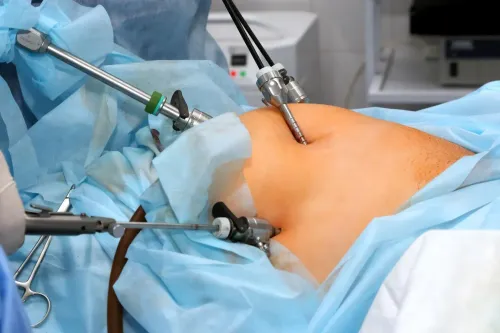
Laparoscopic repair uses several small access incisions instead of the longer incision often needed for open repair. The practical laparoscopic repair benefits include less abdominal-wall disruption, which is attractive for patients with obesity because smaller skin wounds may reduce wound morbidity and make early movement easier.
| Approach | Pain and recovery pattern | Important trade-off |
|---|---|---|
| Laparoscopic | Often less early pain, earlier walking and shorter hospital recovery | Requires general anaesthesia and technical access around previous surgery |
| Open | Pain may be greater around a longer wound; walking and work can take longer | Direct access can suit very large defects, dense adhesions or complex reconstruction |
| Either | Return to work depends on the hernia, operation, job and individual health | Smaller incisions do not guarantee fewer complications or recurrence |
Mesh can sit intraperitoneally, against the abdominal organs, or extraperitoneally, outside the peritoneal cavity. That position changes port planning, bowel-contact risks, adhesions and the repair strategy.
Laparoscopy does not eliminate bowel injury, bleeding, seroma, chronic pain, mesh infection, adhesions, trocar-site hernia or recurrence. If adhesions, bleeding or unsafe anatomy prevent progress, conversion to open repair is a safety decision, not necessarily a failed operation.
For groin hernias, laparoscopy is particularly useful for bilateral or recurrent disease. For a first unilateral groin hernia, open and laparoscopic approaches can both be reasonable; the choice depends on anatomy, health, anaesthesia and surgeon experience.
When hernia repair should be combined with or separated from bariatric surgery
Simultaneous repair and staged treatment are both used for selected patients; there is no rule that every hernia must be repaired before or during bariatric surgery. The decision depends on defect size, symptoms, incarceration risk, planned bariatric procedure, contamination risk, mesh location and whether later weight loss will change abdominal-wall reconstruction.
1. Delaying a symptomatic ventral or incisional hernia leaves a risk of incarceration. Repairing a large ventral hernia during a gastrointestinal or bariatric operation can expose mesh to contamination and increase recurrence risk while body weight is changing.
A surgeon may therefore repair a small, troublesome defect during the same operation, or defer a large reconstruction until weight and nutrition are more stable.
2. A hiatal hernia is different from a ventral or incisional hernia because it lies at the diaphragm rather than in the abdominal wall. Repair during a gastric operation depends on reflux symptoms, endoscopy, hernia anatomy and the planned procedure; every small hiatal hernia does not require automatic repair.
3. Preparation can include weight management, smoking cessation, diabetes control and correction of protein, iron, vitamin B12 or other deficiencies. Poor nutrition impairs healing, while obesity increases wound complications and recurrence.
Claims about “laparoscopic hernia surgery pimpri chinchwad benefits” should not replace individual assessment. The recommendation must match your anatomy, operative contamination risk and weight-loss plan, rather than promise a universal benefit from laparoscopy.
Questions to ask a local surgeon before consenting
Compare the surgeon’s plan for your anatomy, not the label “robotic” or “minimally invasive.” Ask these questions before consenting:
- What type of hernia do I have, and what is the defect size on imaging?
- Is it reducible, and is bowel involved?
- Do I need a CT scan, endoscopy, blood tests, or nutritional tests?
- Where will the mesh be placed, and why is that position suitable?
- How will my sleeve gastrectomy, gastric bypass, open operation, or previous mesh repair change port placement?
- What is the plan if adhesions prevent safe laparoscopic access?
- Under what circumstances would you convert to open surgery?
- Should repair be staged around weight loss or bariatric surgery?
- When can I walk, drive, work, lift, and return for follow-up?
- Which symptoms require urgent contact after surgery?
Compare approaches across the factors that affect your case:
| Approach | Potential advantage | Important trade-off |
|---|---|---|
| Laparoscopic | Smaller access wounds and earlier movement | Adhesions, bowel injury, seroma, recurrence, or conversion remain possible |
| Open | Direct access for large or complex defects | Larger wound and greater wound-healing burden |
| Robotic | Better instrument articulation for selected repairs | Can add time or cost; it does not guarantee better results |
Choose a surgeon who regularly treats your exact hernia type and gastrointestinal or bariatric patients. A consultation with Dr.Nikhil Jillawar 08048037739 can review operative records, imaging, nutritional status and laparoscopic, open or staged options. Seek a documented plan matched to your anatomy and risk.
Related service
Laparoscopic Hernia Surgery in Pimpri-Chinchwad, Pune Laparoscopic Hernia Surgery in Pimpri-Chinchwad, Pune Laparoscopic Hernia Surgery is a minimally invasive surgical technique used to repair different types of hernias through small incisions. Dr. View service → |
Frequently asked questions
How is a hernia identified in a patient with gastric symptoms?
The surgeon matches your symptoms and examination with the suspected anatomy, distinguishing ventral, incisional, inguinal, and hiatal hernias from stomach or bowel disorders. Severe pain, vomiting, a tender bulge that cannot be pushed back, abdominal swelling, or inability to pass stool or gas requires urgent assessment.
How does previous gastric surgery change the hernia repair plan?
Previous operations can leave adhesions, altered anatomy, scars, and existing mesh. Give the surgeon your operative notes, discharge summary, imaging, and details of any earlier mesh repair so the access route and repair method can be planned safely.
What are the benefits of laparoscopic hernia repair compared with open repair?
Laparoscopic repair uses smaller access incisions and can reduce wound-related problems and recovery time for selected patients. The right approach depends on hernia size and location, previous operations, adhesions, mesh requirements, medical conditions, and the surgeon’s findings.
Should hernia repair be combined with bariatric surgery?
Combination or staged treatment depends on the hernia’s size, symptoms, obstruction risk, contamination risk, obesity-related factors, and the planned bariatric procedure. Ask which sequence gives the safest mesh position, weight-loss plan, and follow-up schedule.